
Equipments
NOA
.png)
Equipments
Fabrication
Thin film solar cell pilot line – UNO from Midsummer
.png)
The Midsummer UNO R&D system is a deposition tool intended to sputter a material stack in an unbroken vacuum chain on flexible substrates with large dimensions – 152x152 mm (6”). The UNO can be used for a multitude of semiconductor applications like photocatalysis, thermal electric, thin film batteries, phase change memory, coating for fuel cell membranes and deposition of thin film materials on touch screens.
Currently the system is dedicated to Cu(In,Ga)(S,Se)2 (CIGS) thin film solar cells in flexible 6” stainless steel substrates. The research lines that we are exploring with the tool are the development of new thin film solar cell architectures aiming for high values of high performance and reducing material usage, and the integration of solar cells in optoelectronic applications. With its industrial background, the tool allow us to develop technology that is close to the market and opens the door to industrial collaborations.
The tool has the following properties:
• Automatic In- and Out-feed for 300 pieces 6” substrates
• Load lock enabling atmosphere to process pressure in <10s
• Midsummer cathode design for 230 mm planar target for high target utilization and uniformity
• Individual process pressure in each sputter chamber
• Heating and cooling stations with process temperatures up to 700°C
• Database logging of all process parameters for each bar-coded substrate
• Small footprint and low ceiling height requirements
• Minimum risk of contamination in the unbroken vacuum chain
• Target and mask change in less than 10 minutes vacuum to vacuum
Vacuum thermal and e-beam Evaporator from Korvus
.png)
The HEX Deposition System is designed to perform materials deposition. Currently, the system present inside the NOA lab is suited to perform only thermal evaporation. Briefly, different materials can be evaporated by heating “boats” where “pellets” of bulk material are previously introduced.
The tool is used for metal thermal evaporation and e-beam evaporation, mostly for electrical contacts., such as gold, copper, etc. These are used for solar cells and other optoelectronic devices.
Atomic layer deposition iOV-DX2 from ISAC
.png)
The iOV-DX2 system is designed to support various oxide layer processes for semiconductor devices and can process a single 200 mm wafer using ALD (Atomic Layer Deposition).
Located inside the INL Cleanroom, this tool is used mainly for conformal depositions of dielectric materials. The system is composed with a single wafer load lock and allows up to 5 ALD precursors.
The tool is currently dedicated to the collaboration with SK-Hynix.
Main features:
• PEALD Cluster system
• Reactor size: 8 inch
• Showerhead type
• Process Temperature: from 100 degC to 500 degC
• Allows the usage of 5 different percursors
• Automatic Loading System for Wafers
Nitrogen Glovebox I-Lab 2GB from INERT
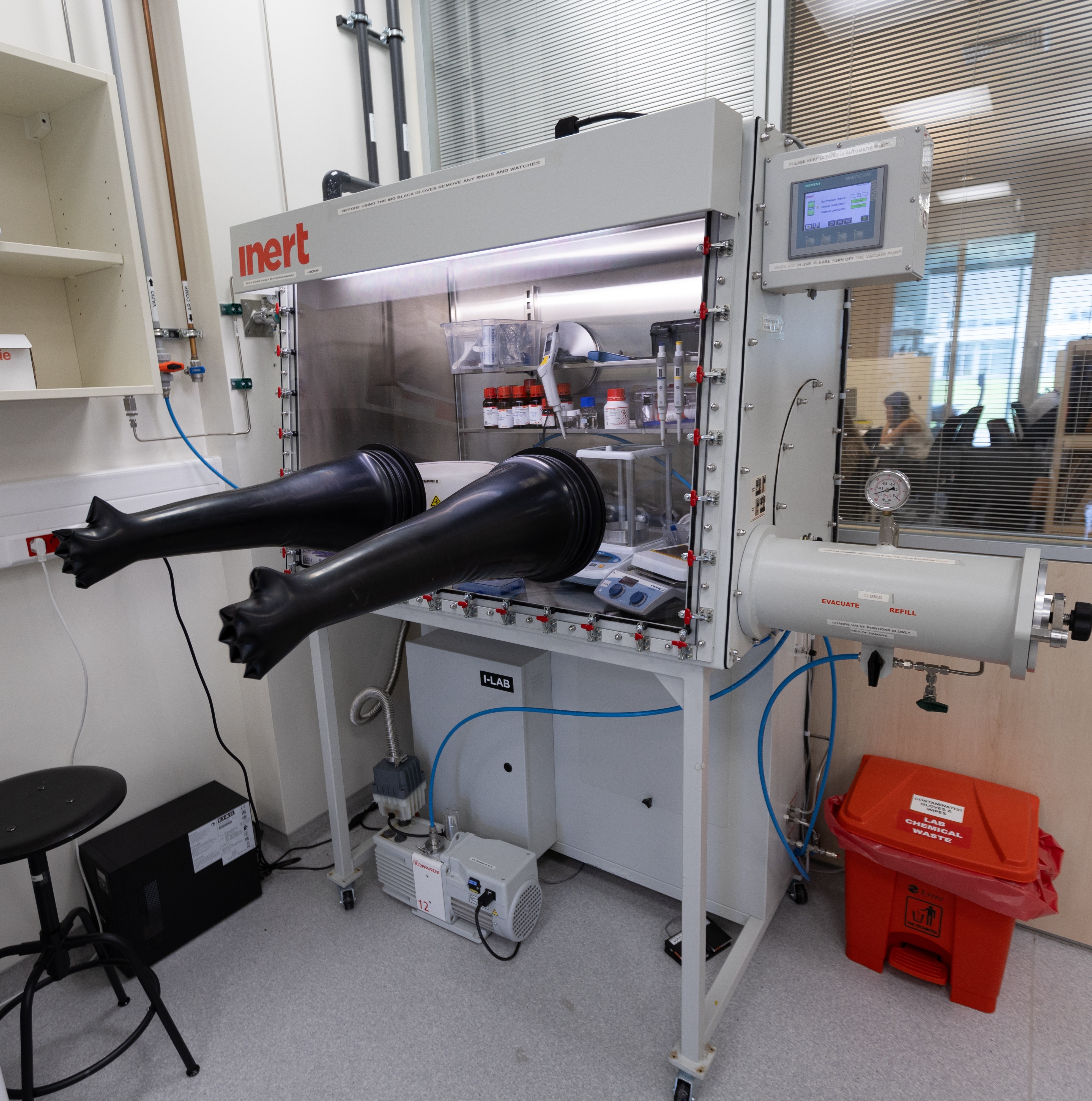
The INERT I-Lab 2GB is a compact and high-performance glove box system designed for handling sensitive materials in a controlled inert atmosphere. It provides a fully sealed
working environment with precise regulation of oxygen and moisture levels, ensuring ideal conditions for research in materials science, chemistry, and semiconductor applications. The I-Lab 2GB features high-quality stainless-steel construction, large viewing windows, and ergonomic glove ports for comfortable operation. Its integrated gas purification system maintains ultra-low impurity levels, while the modular design allows easy integration with external equipment such as vacuum ovens or deposition systems. This makes the INERT I-Lab 2GB a reliable and flexible solution for laboratories requiring contamination-free processing and sample handling. The glovebox is equipped with a spin coater, scale, heating plate, and several other chemical apparatus that allow us prepare perovskite solar cells composed by CsMAFAPblBr+SpiroOMeTAD.
Inkjet Printer DMP-2850 from Fujifilm
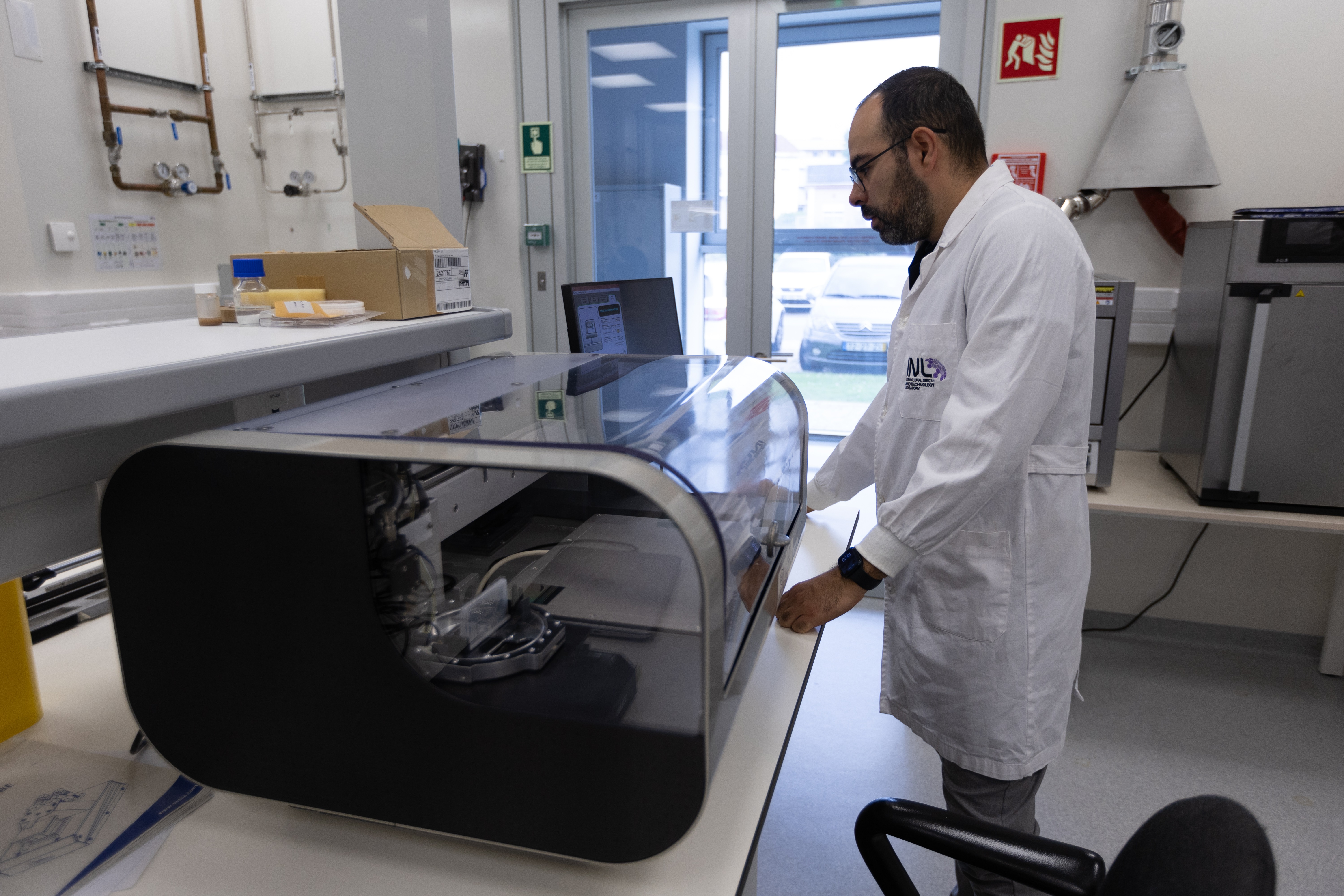
The DMP-2850 allows the deposition of fluidic materials on an 8x11 inch or A4 substrate, utilizing a disposable piezo inkjet cartridge. This printer can create and define patterns over an area of about 200 x 300 mm and handle substrates up to 25 mm thick with an adjustable Z height. The temperature of the vacuum platen, which secures the substrate in place, can be adjusted up to 60°C. The DMP-2850 offers a variety of patterns using a pattern editor program. Additionally, a waveform editor and a drop-watch camera system allows manipulation of the electronic pulses to the piezo jetting device for optimization of the drop characteristics as it is ejected from the nozzle. This system enables easy printing of structures and samples for process verification and prototype creation. The printer is used to test different materials and geometries of electrical contacts for optoelectronic and solar cell devices.
Ashing furnace, L 9/11 BO from Nabertherm
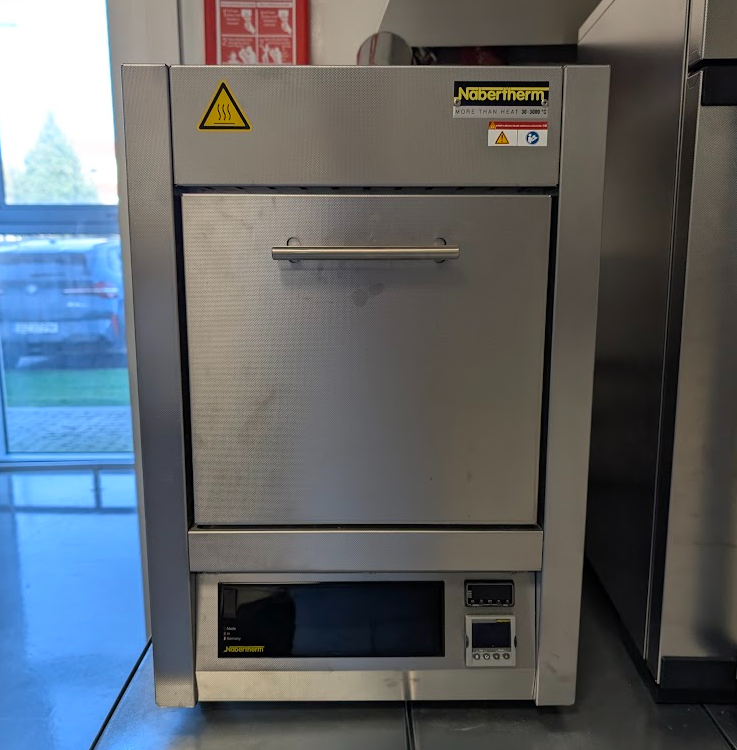
This ashing furnaces is specially designed for processes in which organic substances must be evaporated from the charge. The ashing furnace has passive safety system and integrated exhaust gas post combustion. An exhaust gas fan extracts the exhaust gases from the furnace and simultaneously supplies fresh air to the furnace atmosphere with the result that sufficient oxygen is always available for the process. The incoming air is guided behind the furnace heating and preheated to ensure good temperature uniformity. Exhaust gases are directly led from the furnace chamber to the integrated post combustion system, where they are burned and catalytically cleaned.
Temperature: 30 - 3000ºC
The furnace is currently used in the development of materials for batteries where the produced fumes needs to be treated.
3D printer A1 from BambuLab
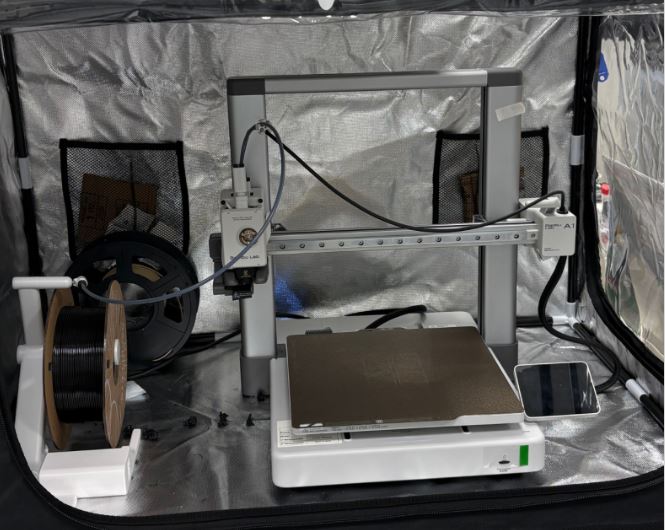
A 3D printer used for quick prototyping of small pieces and demonstrators.
• Full-auto Calibration
• Active Flow Rate Compensation
• 1-Clip Quick Swap Nozzle
• Active Motor Noise Cancelling
• 256*256*256 mm³ Build Volume
• The upgraded heatbed cable features Kevlar reinforcement, thicker insulation, softer copper, optimized wire winding interval, Nylon sleeving and an extended strain relief.
Materials available:
• PLA
• PETG
• ABS
• PP
• TPU
Ossila - Dip Coater
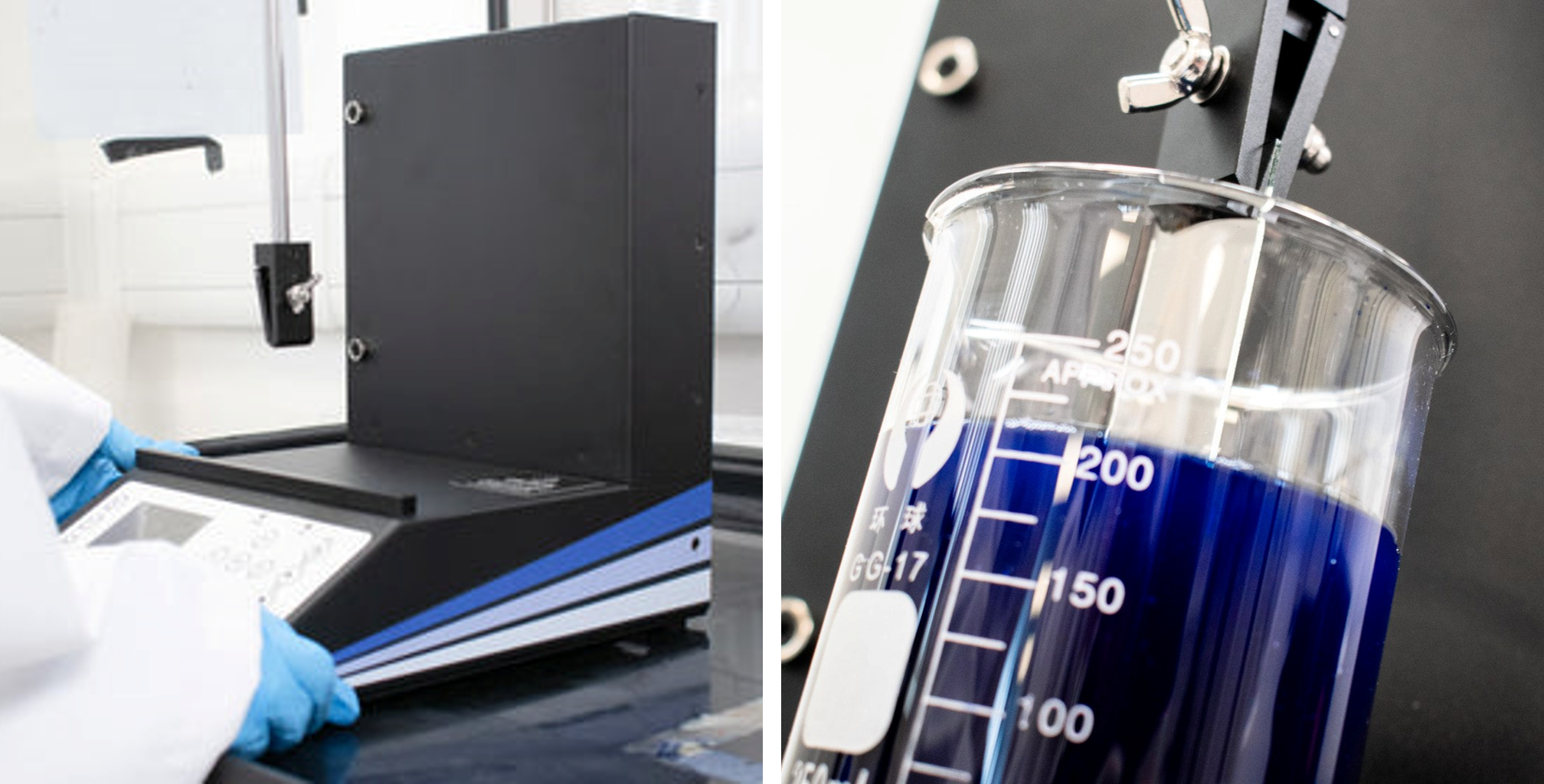
With high performance specifications and simple-to-use integrated software, the Ossila Dip Coater gives you the tools to coat high quality films at an affordable price. Our dip coater uses a high precision stage and motor to consistently produce and reproduce high quality films with ease.
The integrated software makes it easy to set up and allows you to choose between manual or automatic operation. Set the immersion and withdrawal properties independently to create both constant and variable film thicknesses. You can save 10 different programmes, each of which can store up to 20 routines, to coat multiple substrates without needing to reconfigure the device each time.
Designed by experienced materials scientists, the Ossila Dip Coater improves workflow in the lab with a quick-release clamp and magnetic ruler attachment.
Muffle, UF55 from Memmert
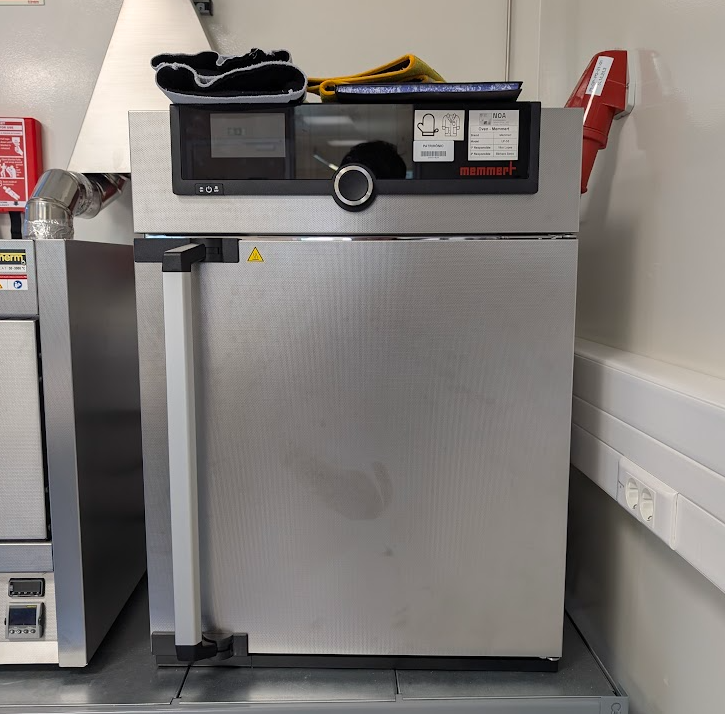
The universally applicable lab oven U is Memmert’s classic appliance for temperature control in science, research and material tests in industry. Made of high-quality, hygienic, easy-to-clean stainless steel leaves nothing to be desired in terms of ventilation and control technology, overtemperature protection and precisely tuned heating technology. Temperature: 20 to 300ºC
Argon Glovebox, UNIlab Pro from MBraun
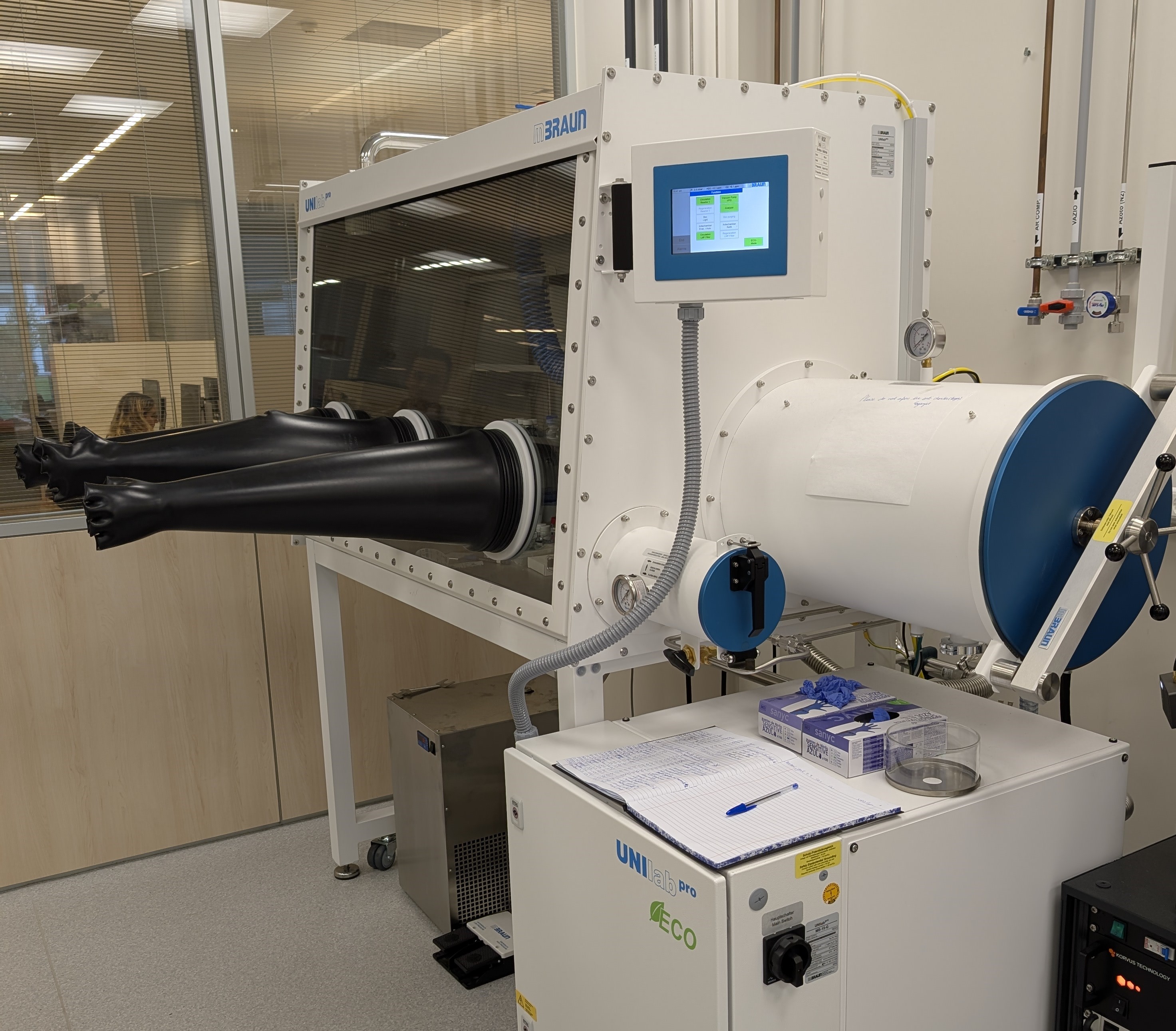
The UNIlab Pro Glovebox provides precise working conditions in a controlled atmosphere with < 1 ppm oxygen and humidity. The robust stainless steel housing with resistant window ensures maximum stability and perfect visibility. The glovebox is equipped with Solvent Sensors, Moisture Sensors and Oxygen Sensors. In it several chemical apparatus like press, crampler, scale, hot plate, allows us to make Li and Na coin cells as well as to study Li, Na and K components and end-of-life materials such as black mass as deteriorated cells.
Ossila - Doctor Blade Coater
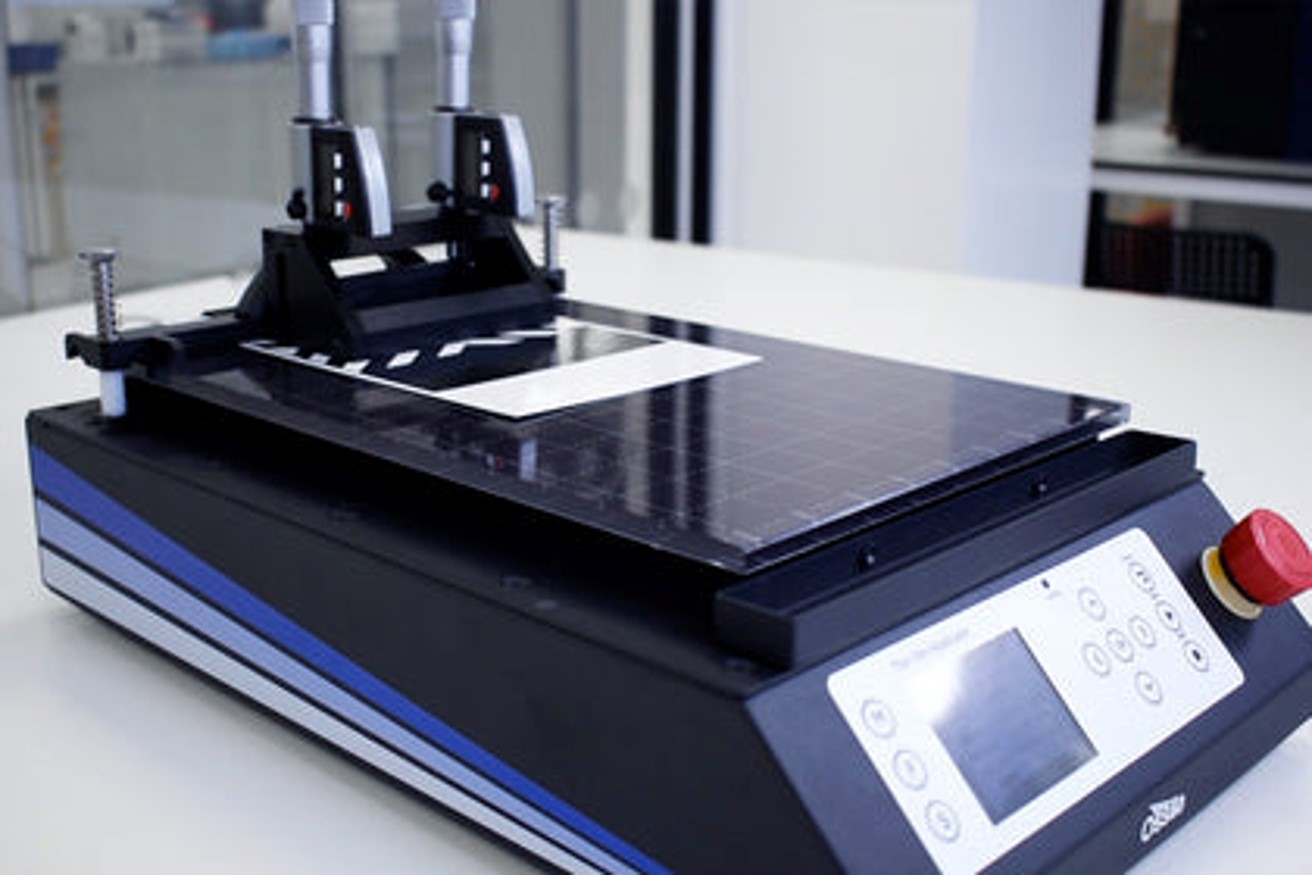
Take control of essential coating parameters with our automatic doctor blade coater. The included applicator is made from stainless steel with digital micrometer gauges. Make micron-level adjustments to the gap height (up to 10 mm) with ultimate accuracy for a range of film thicknesses as you optimize your coatings.
The integrated software makes it easy to adjust and set the coating speed, from 0.05 mm.s-1 to 250 mm.s-1. Beyond blade coating, you can also use Mayer rods, which can be purchased separately, for further flexibility as you experiment with and optimize your coatings. The doctor blade coater can either come with a simple glass stage or a vacuum stage for uniform holding across the whole substrate.
Tubular Oven 5H from Termolab
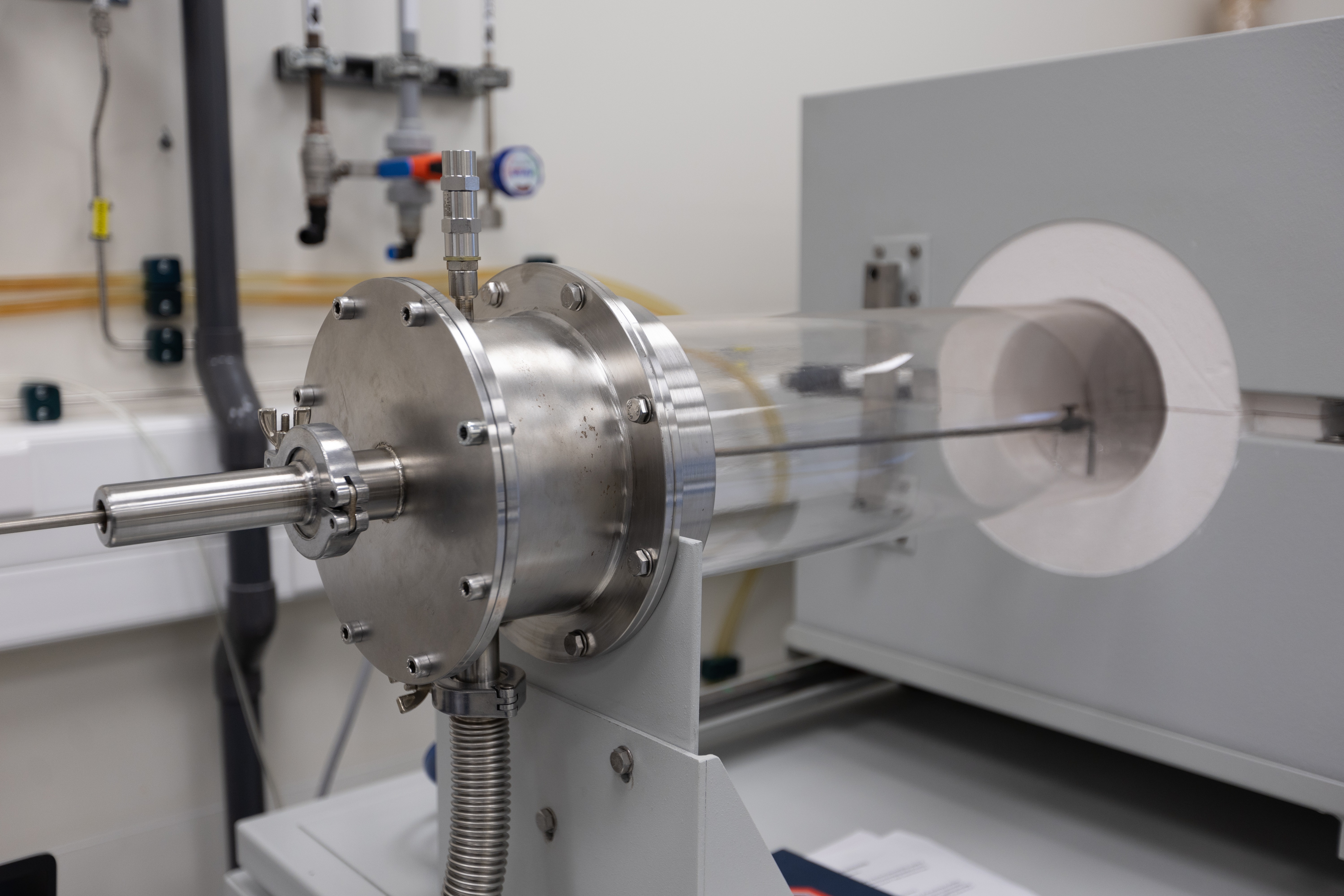
This tubular Oven allows for annealing of samples with dimensions up to 6´´ in different configurations, under vacuum, with several atmospheres such as N2, ar, N2+H2, NH3, etc making it possible to do complex processes based on chemical vapour deposition. With a speciality sample holder, we are also able to do selenizations or sulphurizations. The tool allows for movement of the heaters and of the sample holders allowing for heating and cooling ramps that are dissociated from the heating elements.
Main features:
• Maximum working temperature 1800 °C
• High heating and cooling rates
• Heating elements made of Kanthal metal alloys, silicon carbide (SiC), or Kanthal Super (MoSi₂)
• Thermal insulation with rigid ceramic fiber
• Temperature control using Eurotherm controllers
• Power control via solid-state relays or thyristor units.
Planetary Ball Mill Machine (Model LITH-XQM)
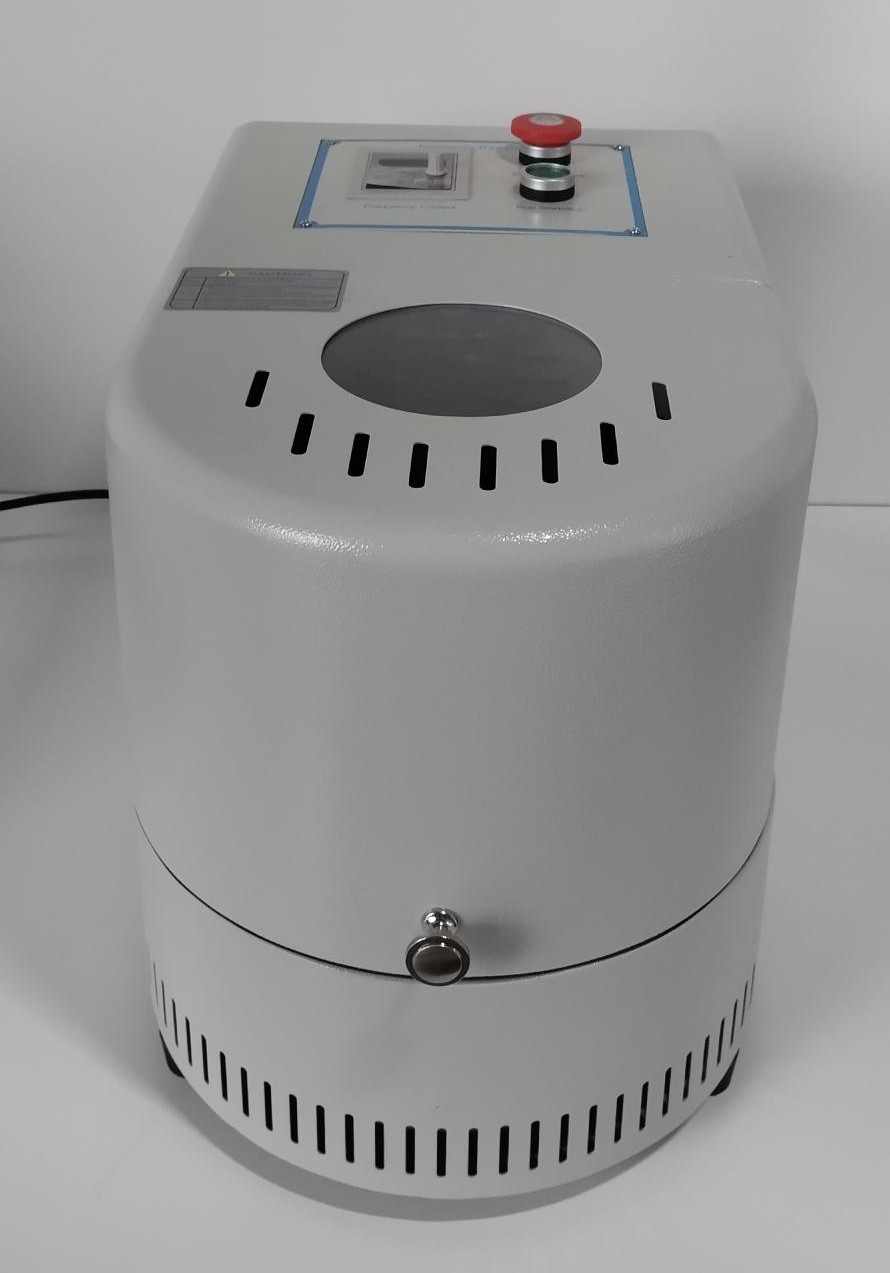
The Planetary Ball Mill Machine (Model LITH-XQM) is used for grinding, mixing, and mechanochemical reactions in small-scale material processing. It operates with two or four grinding tanks and reaches speeds up to 800 rpm. The machine reduces particle size to 0.1 μm and works with feeding materials up to 10 mm for soil and 3 mm for other materials. It uses a gear-driven system with a speed ratio of 1:2 and programmable forward and reverse rotation. Maximum continuous operation time is 72 hours. The design is compact and suitable for laboratory applications.
Ossila - Slot Die Coater
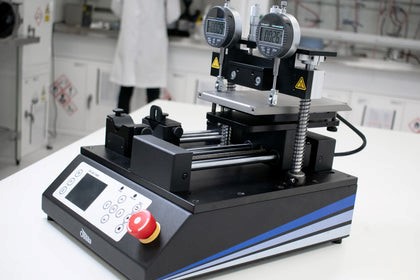
Our complete slot die coater features an integrated high-precision syringe pump and customizable head. With stage speeds ranging from 50 μm.s-1 to 75 mm.s-1, an improved flow rate range (0.5–624 μl.s-1 for a 5 ml syringe), easy levelling, and large coating area, you have full control over the parameters critical to improving the uniformity of your films.
This slot die coater is suitable for users at any level. With intuitive software and adaptable design, you control the flow rate, coating speed, plate temperature, alignment, channel thickness, head height, multiple step programming, and more. Our modular accessories make the Ossila Slot Die Coater easy to tailor to your specific coating needs.
SPS Polos - Spin Coater
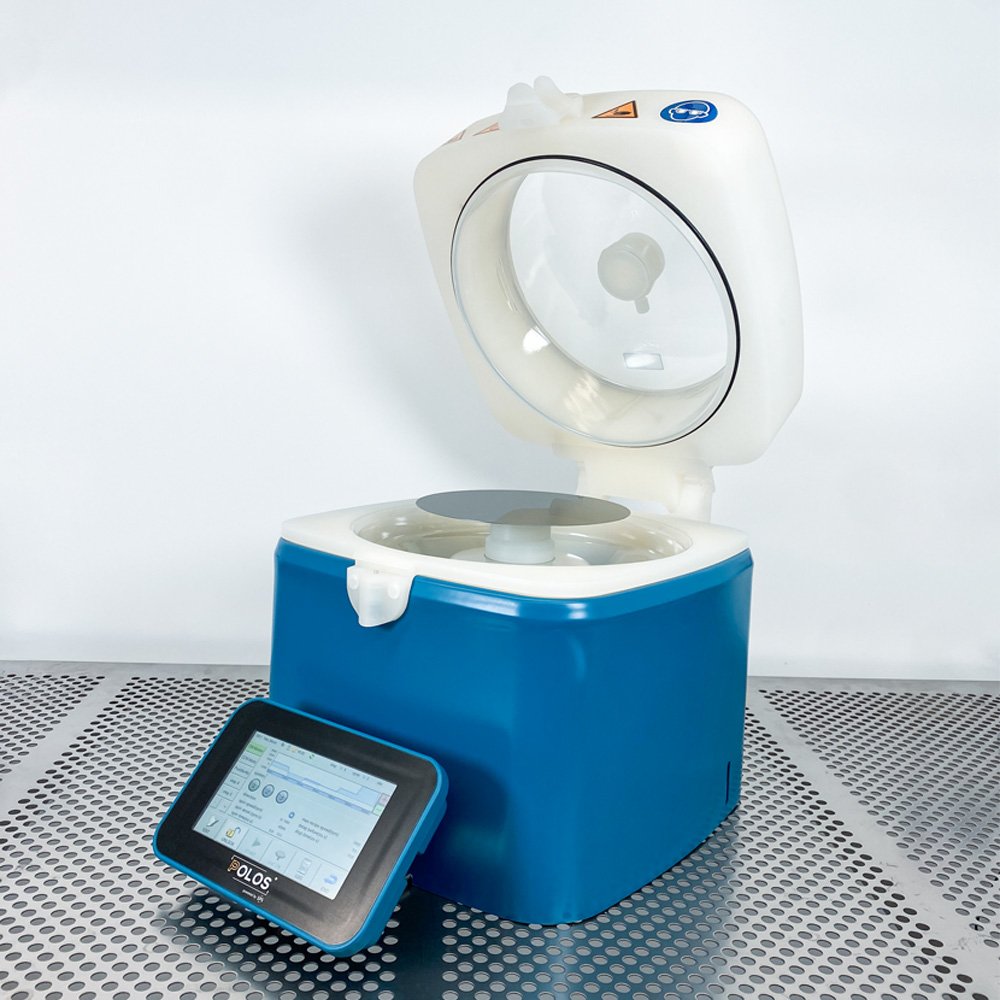
The system is designed to accommodate wafers up to 8 inches (200 mm) in diameter and substrates up to 6" × 6" (150 mm). Constructed from natural polypropylene (NPP), it offers excellent chemical resistance and durability. The unit supports rotational speeds of up to 12,000 RPM, depending on the substrate and chuck used, ensuring high acceleration and precision during operation. It features manual chemical dispensing through a central syringe holder equipped with an integrated nitrogen diffuser and a liquid filter trap for safe and controlled processing. The system allows clockwise and counterclockwise rotation and is operated via a colour touchscreen interface with customisable icons for user convenience. Additional functionalities include a USB port for data transfer. The entire unit has a total weight of approximately 20 kg, and total of 53.3 x 38.4 cm2 lateral dimensions and 38.1 cm hight.
Retsch RM 200
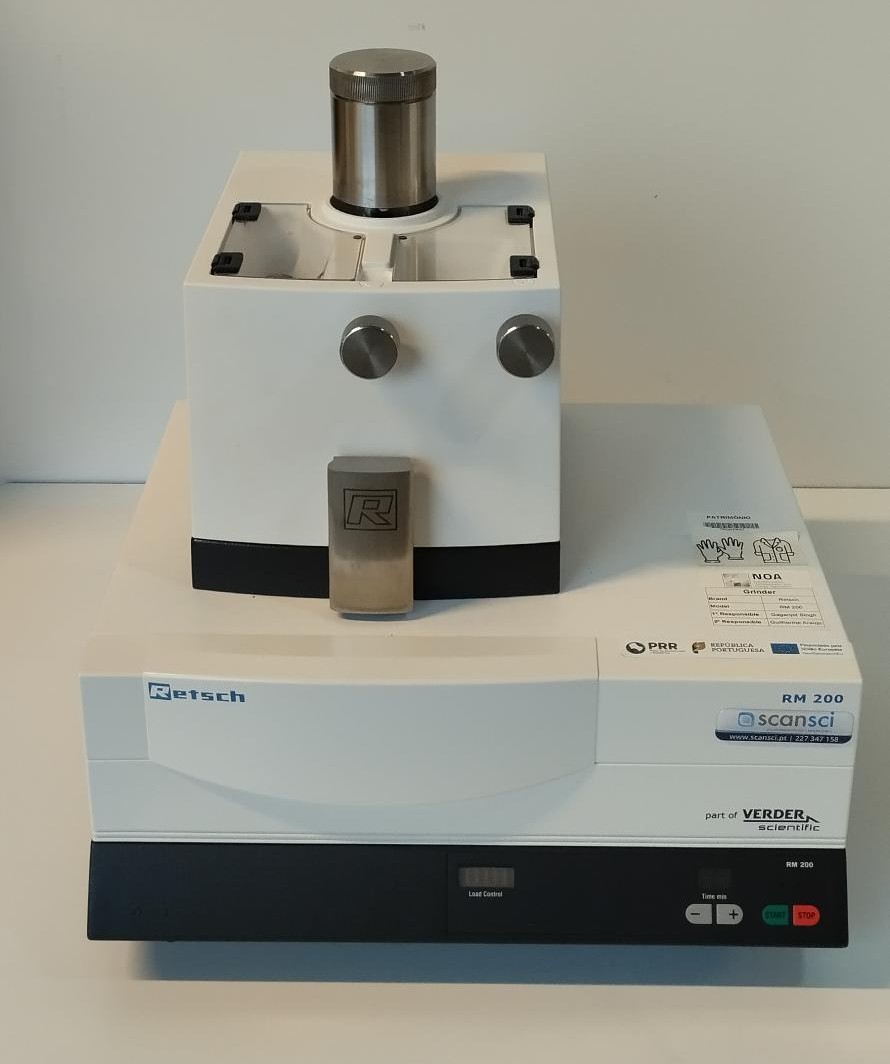
The Retsch RM 200 mortar grinder is a laboratory device used for reproducible grinding and homogenization of solid samples.
It operates by controlled pressure and friction between a rotating pestle and a stationary mortar.
The system allows gentle size reduction, making it suitable for brittle or heat-sensitive materials.
Grinding parameters such as speed and pressure can be adjusted for consistent results.
Characterization
UV-VIS-NIR spectrometer, Lambda 1050+ from PerkinElmer
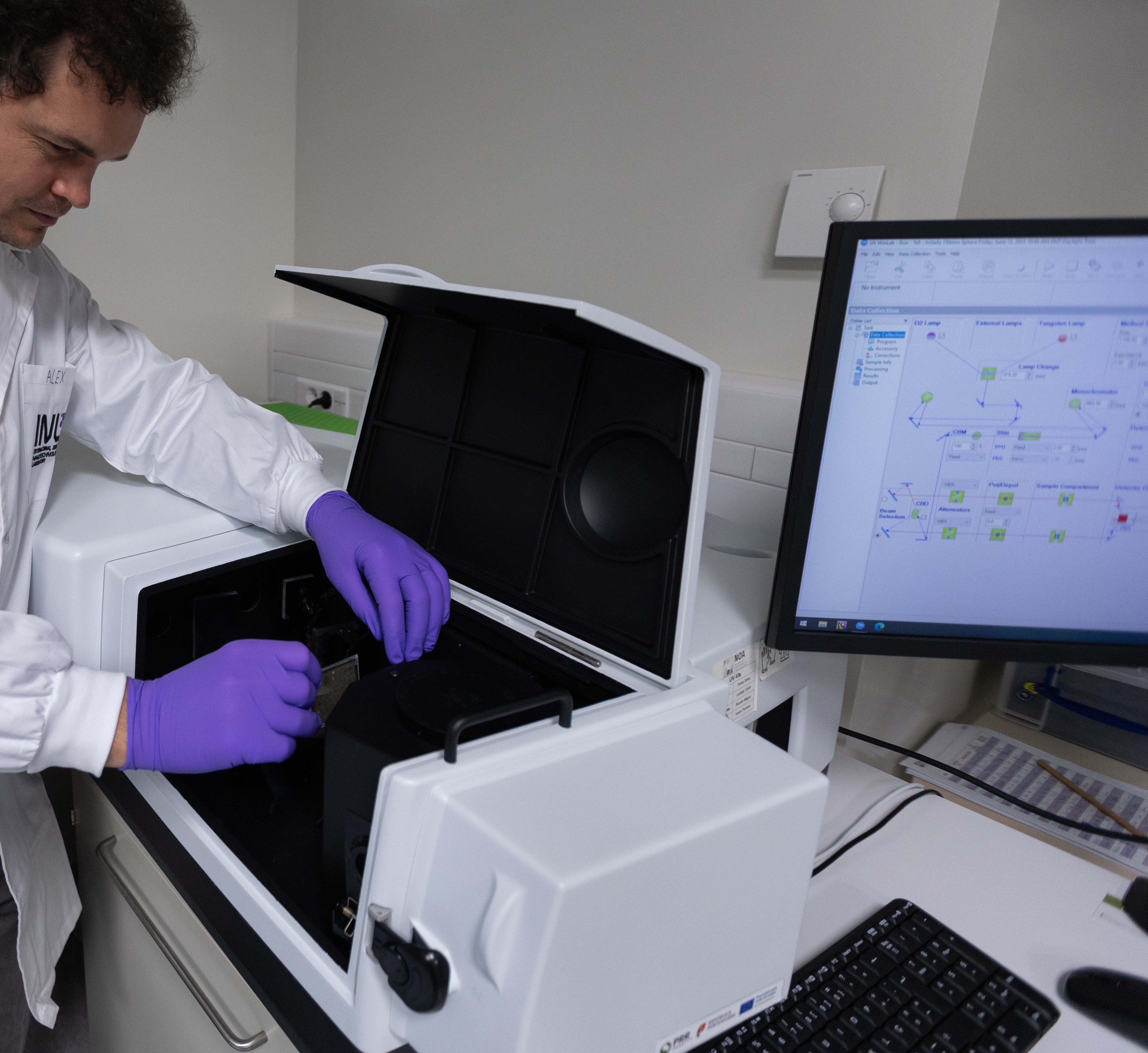
The PerkinElmer Lambda 1050+ is a high-performance spectrophotometer designed for precise measurement of the optical properties, including transmission, reflection, and absorption—of both liquid and solid samples across the ultraviolet, visible, and near-infrared (UV-Vis-NIR) spectral ranges. This system is equipped with three interchangeable modules that enable a wide variety of measurement modes:
• 3-Detector Module – for standard optical measurements with high sensitivity across a broad spectral range.
• Integrating Sphere Module – for total and diffuse transmittance, reflectance, and absorbance measurements on solid samples, as well as total transmittance and absorbance for liquid samples.
• TAMS (Transmittance/Absorbance/Measurement System) Module – for angle-dependent optical measurements, providing detailed characterization of material behaviour under different light incidence conditions.
The Lambda 1050+ employs two light sources to ensure continuous and stable spectral coverage: a Deuterium lamp for the ultraviolet region and a Tungsten-Halogen lamp for the visible to near-infrared regions. The detector sensitivity ranges for each module are as follows:
• 3-Detector Module: 175–3300 nm
• Integrating Sphere Module: 200–2600 nm
It is possible to purge the system with nitrogen (N₂) gas for measurements conducted at wavelengths below 200 nm (ionizing radiation region).
Solar Simulator, 94083A from Sol3A

The 94083A is a Sol3A solar simulator that delivers Class AAA performance using a 1600-watt, ozone-free xenon lamp to uniformly illuminate an 8 x 8-inch area. It meets the IEC 60904-9 Edition 2 (2007), JIS 8904-9 (2017), and ASTM E927-10 (2015) Spectral Match, Spatial Non-Uniformity of Irradiance, and Temporal Instability of Irradiance. The 94083A attains all three criteria with a single-lamp configuration while still maintaining a full 1-sun output, ensuring true Class AAA performance.
Ossila - Contact Angle Goniometer

Optimize inks and coatings efficiently with fast, reliable, and easy contact angle and surface tension measurement of liquid droplets. The Ossila Contact Angle Goniometer brings intuitive PC software, high quality video, and rapid image capture to your lab. Use the software to characterize high contact angles for water resistant or protective coatings, or low contact angles for highly uniform solution coatings.
Optical Microscope with automated sample holder, DM8000 M from Leica
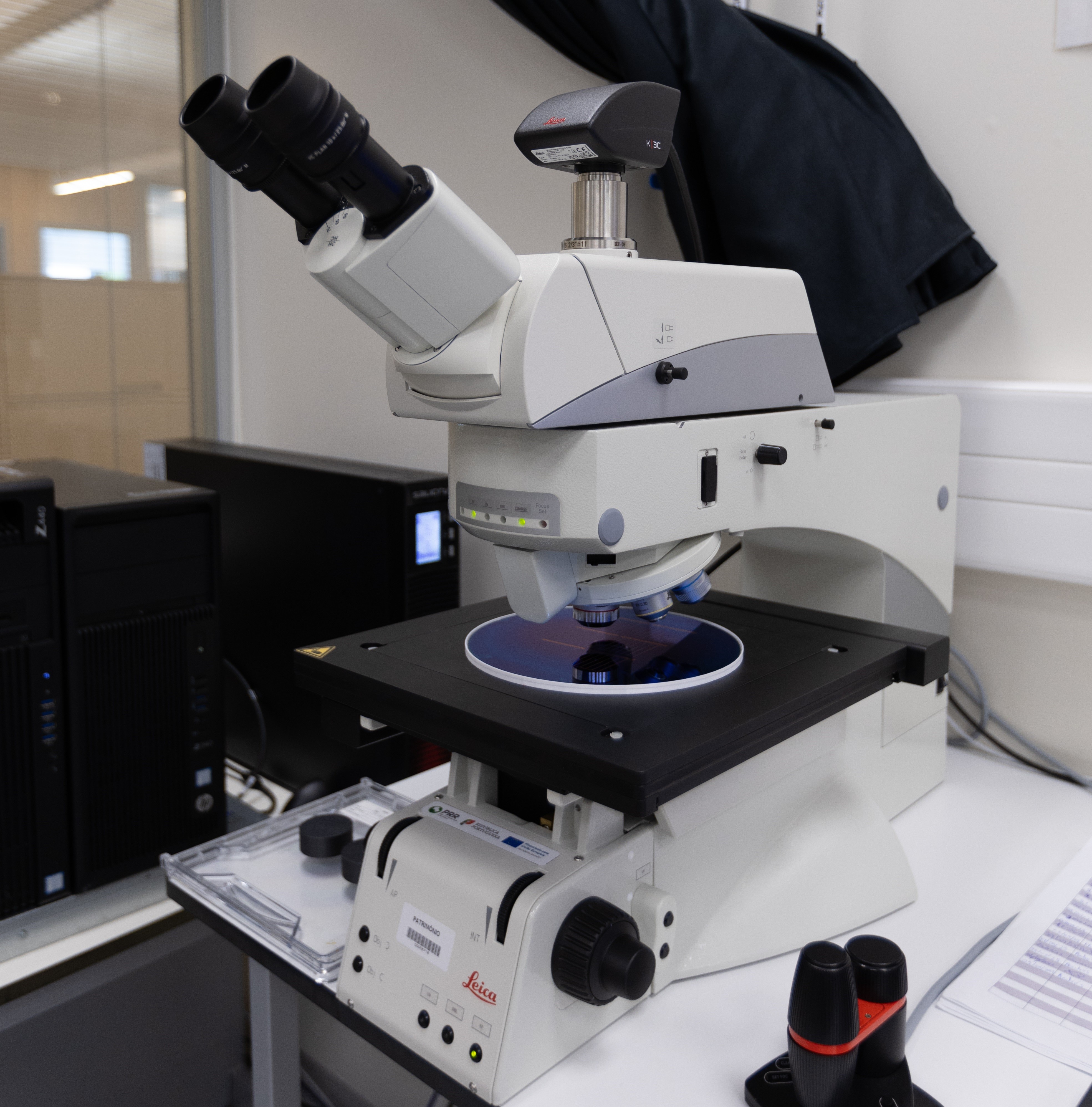
The Leica DM8000 M is a high-performance materials microscope designed for advanced industrial and research applications. It offers exceptional optical quality with Leica’s renowned Infinity Optics system, ensuring sharp, high-contrast imaging across a wide magnification range. The DM8000 M supports both brightfield and darkfield, as well as polarized light, DIC, making it highly versatile for material and semiconductor analysis. It features motorized components, LED illumination for stable, long-lasting light, and an ergonomic design for comfortable operation. Combined with Leica’s LAS X software, the DM8000 M enables precise image capture, measurement, and documentation for demanding microscopy workflows. The microscope is used for metrology of devices, films and samples produced in the group and with its automated features it can probe 200 mm wafers without human intervention.
Quantum Efficiency Measurement, QUANTX- 30
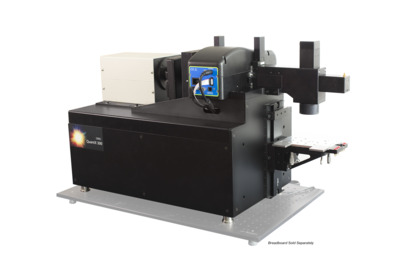
The QUANTX-300 is a result of Newport’s strengths in optics, spectroscopy, PV measurement tools, and precision electronics. These capabilities are combined into a single, advanced platform specifically for quantum-efficiency, where users can perform both External Quantum Efficiency (EQE) and Internal Quantum Efficiency (IQE) measurements on any type of solar cell. The QUANTX-300 is a fully integrated, ready-to-use instrument that includes all required hardware: a built-in illumination source, monochromator, detection modules, control electronics, and dedicated software. A patented optical layout that incorporates a beam splitter enables the system to record EQE and reflective losses at the same time, allowing accurate determination of IQE. A distinguishing feature is the software-controlled voltage-bias capability, offering adjustable biasing from –10 to +10 V. The instrument also supports four-wire sensing, making it compatible with a wide range of device sizes and efficiency levels. Its detector architecture allows a measurement coverage from 325 nm to 1800 nm.
Stylus profiler, Alpha-Step D600 from KLA
.png)
The Alpha-Step D-600 stylus profiler supports 2D and 3D surface measurements of step heights and roughness, plus 2D bow and stress. The stylus profiler’s innovative optical lever sensor technology offers high resolution measurements, large vertical range and low force measurement capability.
An advantage of the stylus measurement technique is that it is a direct measurement, independent of material properties. Adjustable force and choice of stylus enable accurate measurements of a wide variety of structures and materials. This stylus measurement option enables quantification of your process to determine the amount of material added or removed, plus any changes in structure by measuring roughness and stress.
Four Point Probe from Ossila
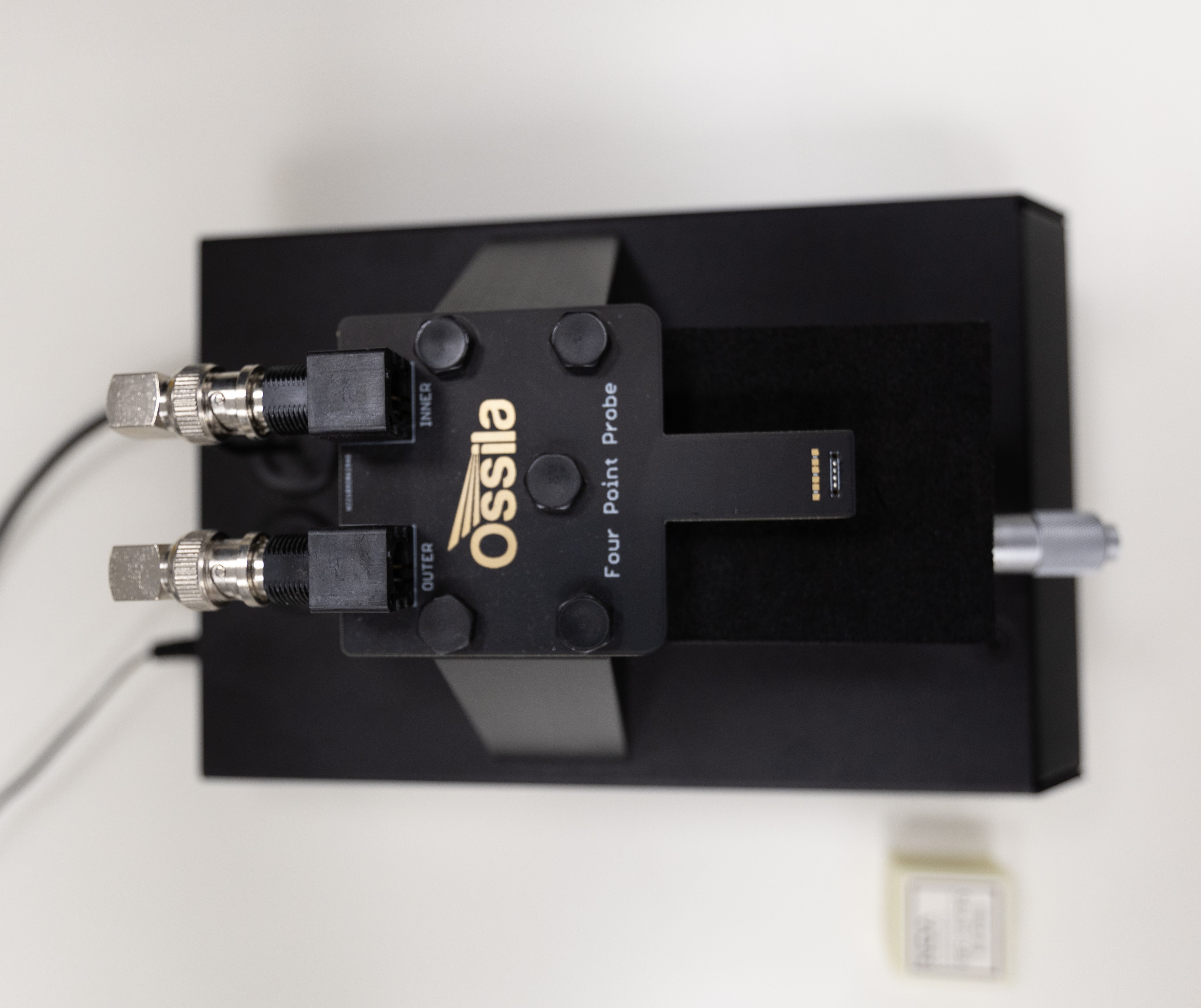
A four point probe system for small sample size capable of measuring sheet resistance, resistivity, and conductivity of thin films. With two probe types available:
· Soft-tipped probes are suitable for delicate samples such as organic materials or very thin films. The spring-loaded, rounded contacts take high quality surface measurements without damaging your sample.
· Sharp-tipped probes are designed to pierce insulating oxide layers for reliable measurement of materials of hard materials like silicon.
Missing: climate chamber, EQE, JV; PEC; battery impedance 1 and 2 can be done together, battery cycler, optical table with laser cooling grating etc.