
NOA -

FCT CEEC – Jennifer Teixeira
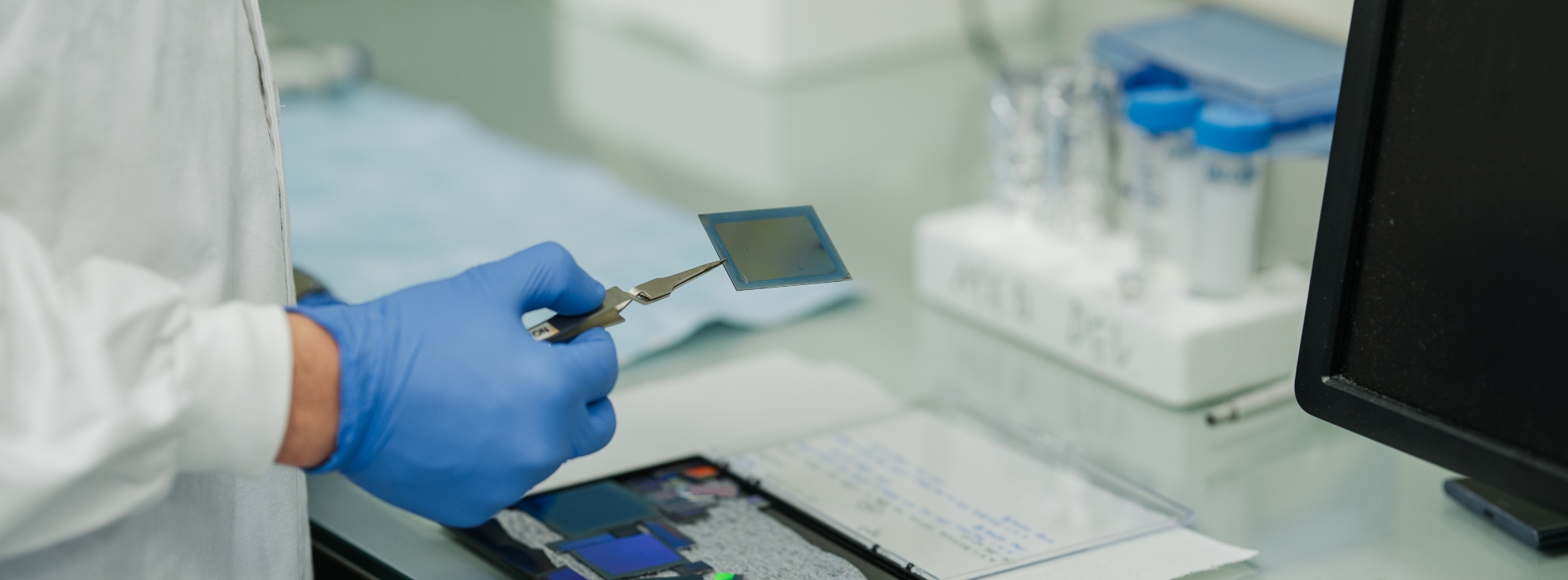
Nanolaminates are created by multiple layers of two or more materials with nm-thickness, offering significant improvements over single layer materials, as their properties change according to the elemental layered intermixing design. Hence, this proposal aims to build a toolbox of nanolaminate materials with unique and outstanding physical properties, otherwise not available by individual materials, and with a diverse set of optoelectronic applications so that custom-made properties can be achieved. Nanoscale tailoring novel materials for specific applications will be a scientific and technological breakthrough. For showcasing purposes, we will design and develop nanolaminated carrier selective contacts for a novel Cu(In,Ga)Se2 (CIGS) solar cell, leading to up to 2.5% increase in performance.
Notwithstanding, the increase of CIGS efficiency from 19-23% in the last few years [1], the associated technology has not changed its architecture since the 80s [1,2]. The development of advanced contacts for CIGS is still in its infancy, and only single dielectric layers were tested, with limited results [3]. The proposed research plan aims to overcome the limitation of using single dielectrics passivation contacts, by developing nm-thickness combinations of dielectric binary oxides through the control of the composition, thickness of each individual material, and arrangement of the layers, achieving effective carrier selective contacts [4,5]. We will be achieving a real combo of physical properties to attain carrier selective passivation contacts: chemical passivation (Dit<10^11eV-1cm-2), fieldeffect passivation (Qf>10^13cm-2), low-contact resistance (<1Ohm), carrier selectivity, chemical stability up to 500oC, diffusion barriers, among other properties . No unique compound today matches all these requirements. These novel contacts can lead to an increase in cell performance up to 3.5% . State-of-the-art atomic control allows tailor purposes, so atomic layer deposition will be used, and an upscaling will be made by using chemical vapour deposition for low cost and large-area deposition purposes. This project will disrupt the way material science is done today, instead of testing existing materials for its properties, we will create new materials with desired properties. The project methodology will follow a Design of Experiment (DoE) approach with a strong cornerstone in simulations and advanced characterization.
The presented research plan will integrate several key enabling technologies (KET): nanotechnology, advanced materials, and advanced manufacturing systems, and sets itself in the roadmap towards an affordable and sustainable energy system, so for that the candidate strong track-record in optoelectronic materials, along with the state-of-the-art nanofabrication and characterization facilities of the hosting institution, INL, are the perfect stakeholders to coordinate the proposed research plan.
.png)